Avery
English · Character
For fan dubbers and manhwa recap channels
Type or paste the speech bubbles in reading order. FullCastBook works out who says each line, gives every character their own AI voice and a narrator the panels, and hands back one audio track per episode.
Lewis Carroll
Alice's Adventures in Wonderland
Alice asks the grinning Cheshire Cat for directions — and gets none.
The Cat only grinned when it saw Alice. It looked good-natured, she thought; still it had very long claws and a great many teeth, so she felt it ought to be treated with respect.
Step-by-step guide
No card to sign up, nothing to install.
Hear an example
Generated from the script below with the studio's own voices and settings, one voice per speaker, joined the way an export joins lines. No edits afterwards.
Narrator · Mina · Jun · Instructor Baek · Voices: Gemini 3.8 Flash TTS
Manga & Webtoon Voice Over
What you get, from manuscript to finished audiobook.
Script template
Replace the text in brackets with your own, paste it into the studio, and every speaker gets a voice.
Write one bubble per line with the speaker in capitals before a colon. Narration covers silent panels and sound effects; directions go in parentheses or brackets.
Chapter [NUMBER]: [EPISODE TITLE]

NARRATOR: Previously, [ONE-SENTENCE RECAP OF THE LAST EPISODE].
NARRATOR: [WHERE WE ARE, IN ONE SENTENCE: "Rain hammers the academy rooftop."]
[HERO]: [FIRST BUBBLE]
[FRIEND]: (worried) [REPLY]
[HERO]: [quietly, inner thought] [THOUGHT BUBBLE]
NARRATOR: [SOUND EFFECT AS A SENTENCE: "A door slams somewhere below."]
[RIVAL]: (smirking, stepping into the light) [TAUNT]
[HERO]: [SHORT COMEBACK]
[RIVAL]: [laugh] [LINE THAT RAISES THE STAKES]
[FRIEND]: [shouting] [HERO]! Behind you!
NARRATOR: [WHAT THE BIG PANEL SHOWS, IN ONE OR TWO SENTENCES].
[MINOR CHARACTER 1]: [ONE-LINE REACTION]
[MINOR CHARACTER 2]: [ONE-LINE REACTION]
[HERO]: (cold, slow) [THE LINE THE EPISODE IS BUILT AROUND]
NARRATOR: [CLIFFHANGER IMAGE, ONE SENTENCE].
[RIVAL]: [whispers] [LAST LINE OF THE EPISODE]

Chapter [NEXT NUMBER]: [NEXT TITLE]

NARRATOR: ...
Each Chapter line starts a new chapter (in a Markdown file, # headings do the same), and its title is read at the top of that file; keep it short or trim it in your editor.
Use cases
Where authors and storytellers put it to work.
In practice
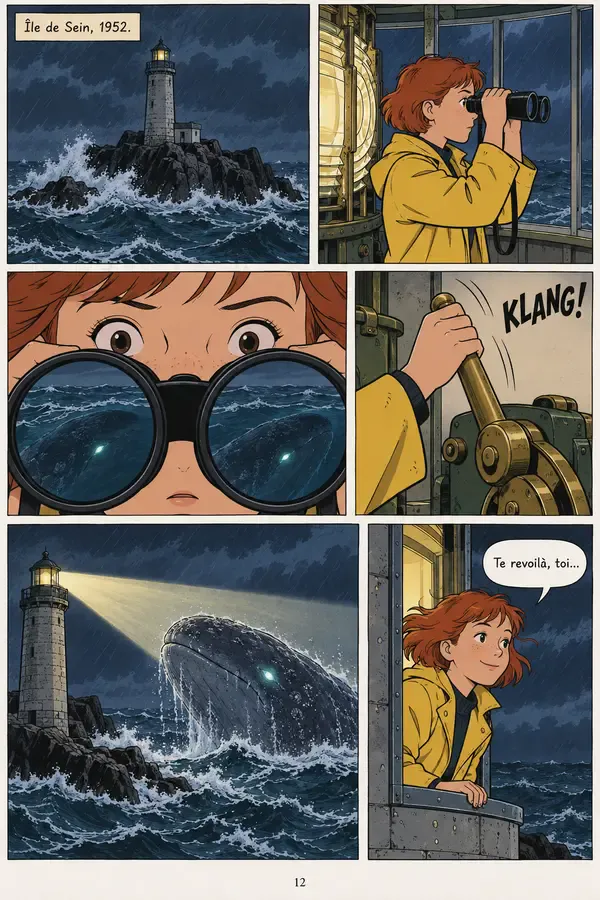
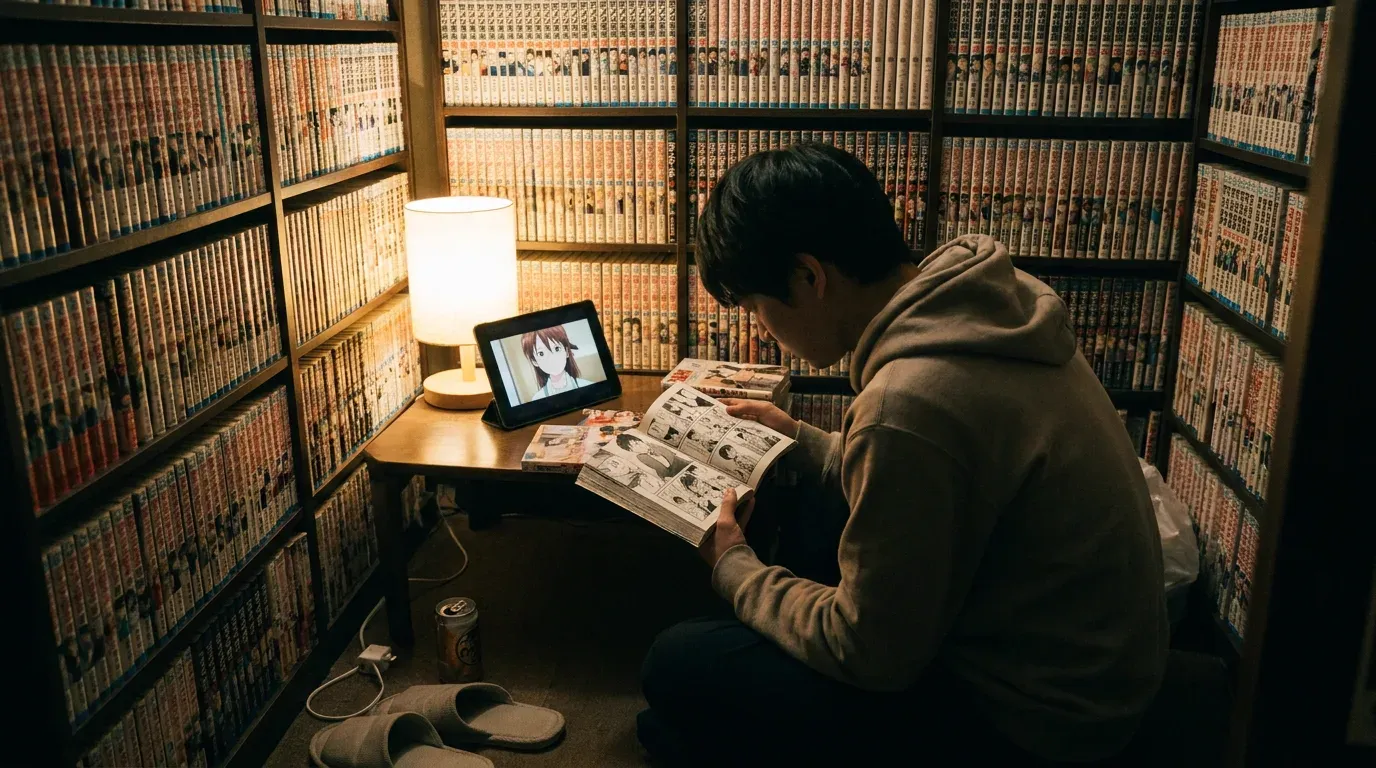
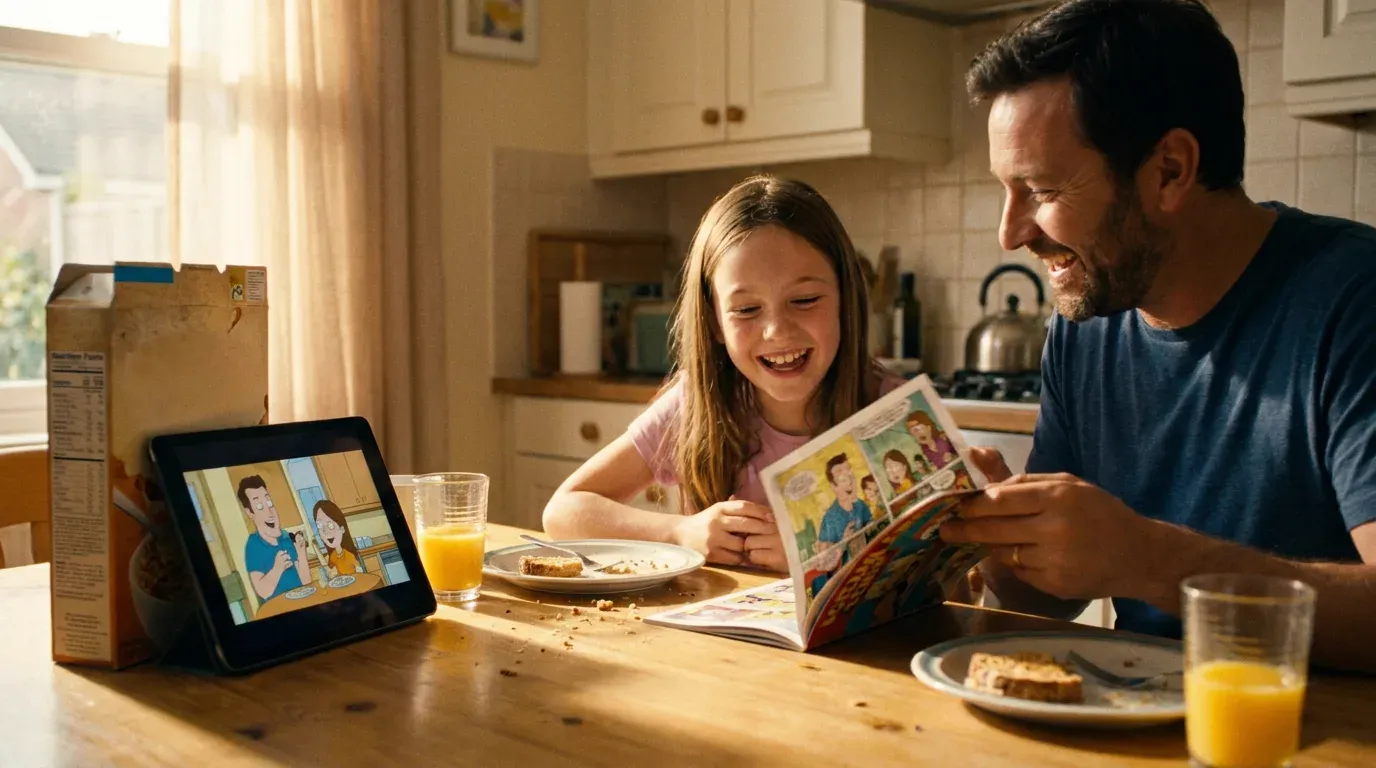
Demo performances. In the studio you cast from standard and premium voice lists.
English · Character
English · Character
English · Character
English · Creator
English · Creator
English · Narration
English · Narration
English · Narration
English · Narration
English · Narration
In depth
A manga or webtoon voice over turns a chapter you read with your eyes into one you can hear: each character speaks in their own voice, and a narrator fills in what the panels show. Fan dubbers use it for motion-comic videos, recap channels use it to bring quotes to life, and comic creators use it to hear their own dialogue before it is lettered.
The hard part has never been the voices. It is the bookkeeping: who says which bubble, in what order, in which voice, for forty episodes. FullCastBook reads the script you paste, assigns every line to a character, keeps narration with the narrator and returns one audio track per episode. You check the cast, adjust a few lines and export. If you want the general idea behind it, see multi-voice text to speech.
The studio reads text, not images, so the first job is to write the episode out. Go through the pages in reading order (right to left for most manga, top to bottom for a vertical webtoon) and put each bubble on its own line with the speaker's name in front: JUN: It isn't mine, sir. A bubble split across two panels by the same character can stay as one line.
Panels with no dialogue still matter. A short narrator line, such as "Behind them, the stairwell door creaks open", tells the listener what changed. Sound effects are a choice: a crash written as narration often works better than a voice reading KRAKOOM aloud, and some are best added later from a sound library in your editor. Thought bubbles can go to the same character with a note like [quietly, inner thought], so listeners hear the difference.
Contrast keeps a dub easy to follow. Give the lead and the rival voices that differ clearly in pitch or energy, keep the narrator calmer than everyone else, and save your most unusual voice for the villain or the comic-relief character. A grizzled instructor and a breathless first-year should never be confused, even with your eyes closed. Age matters too: a ten-year-old sidekick read by an adult-sounding voice breaks the spell, so pick a youthful voice and keep the delivery light.
Extras are where dubs get muddy. Name them in the script (GUARD 1, GUARD 2, STUDENT) and let several minor roles share a small pool of voices, so the main cast stays distinct. Romanised names can trip any voice, so spell them the way they sound, like Seo-yeon or Ha-joon, and check the first episode before you commit. The audiobook pronunciation guide has more tricks for names.
A recap video is your own writing: you summarise several chapters, add commentary and quote the moments that matter. That suits one narrator for most of the script, with characters stepping in for short quoted lines. It also keeps the work yours, which matters on video platforms; YouTube's monetization rules, for example, exclude content that only features readings of material you didn't create.
A fan dub voices the chapter as written, every bubble, so the cast does most of the talking and the narrator only bridges silent panels. It needs more characters, more emotional range and closer attention to timing. Both start the same way in the studio; only the balance between narrator and cast changes.
FullCastBook makes the audio, not the video. There is no lip-sync, no panel animation and no music bed. Export one MP3 per episode, or start each scene with a heading line such as Part 2 and download a ZIP with one MP3 per scene, which makes long episodes easier to place on a timeline. Lines are joined with short pauses, so you can stretch a gap for a dramatic page turn or cut one tighter in your editor. Keep the script open beside the timeline; it doubles as a subtitle draft if your video needs captions.
If a line lands wrong once it's against the pictures, rewrite the note, for example from [angry] to [cold, barely moving his lips], and regenerate only that line. More on directing a delivery is in AI voice emotion tags. Generating, recasting and exporting use credits; see pricing for plans.
Your own comic is yours to voice, publish and sell. Someone else's manga or webtoon is not: a dub of the full chapter is an adaptation of their work, so sharing it publicly needs the rights holder's permission, and official translations carry their translators' copyright too. Many creators welcome fan projects when asked; ask first and tell them the voices are AI.
The audio files you export are yours to use under our terms of service, but that doesn't cover the story inside them. The audiobook rights guide explains permission, takedowns and a short request you can send. This is general information, not legal advice.
Tips
Write the chapter's bubbles out in reading order with each character's name in front, paste the script into FullCastBook, check who says each line and pick a voice per character. Export the MP3 and line it up with the panels in your video editor.
Yes. Every character the studio finds in your script gets a voice of their own, and the narrator gets another. You can swap any voice and reassign any line before you generate.
No. FullCastBook reads text, not images, so you type or paste the dialogue (or upload it as TXT, DOCX, PDF or EPUB). A PDF of scanned pages needs a text layer.
No, it makes audio only: an MP3 per episode, or a ZIP with one MP3 per scene or episode. You add the panels, timing, music and effects in your own video editor.
A clear, steady narrator for the recap itself, with distinct character voices for the quotes you include. Keep the narrator calmer than the cast so viewers always know when a character is speaking.
Yes. Keep the series in one project and the cast carries over, so each character sounds the same from the first episode to the latest.
Only if you have the rights holder's permission for a dub of their work, or the comic is yours. Platforms remove content on valid copyright requests; see the audiobook rights guide for how to ask.
No. Signing up is free with no card and voice samples are free to hear, but generating and exporting audio use credits. See pricing for plans and one-time top-ups.
Keep exploring
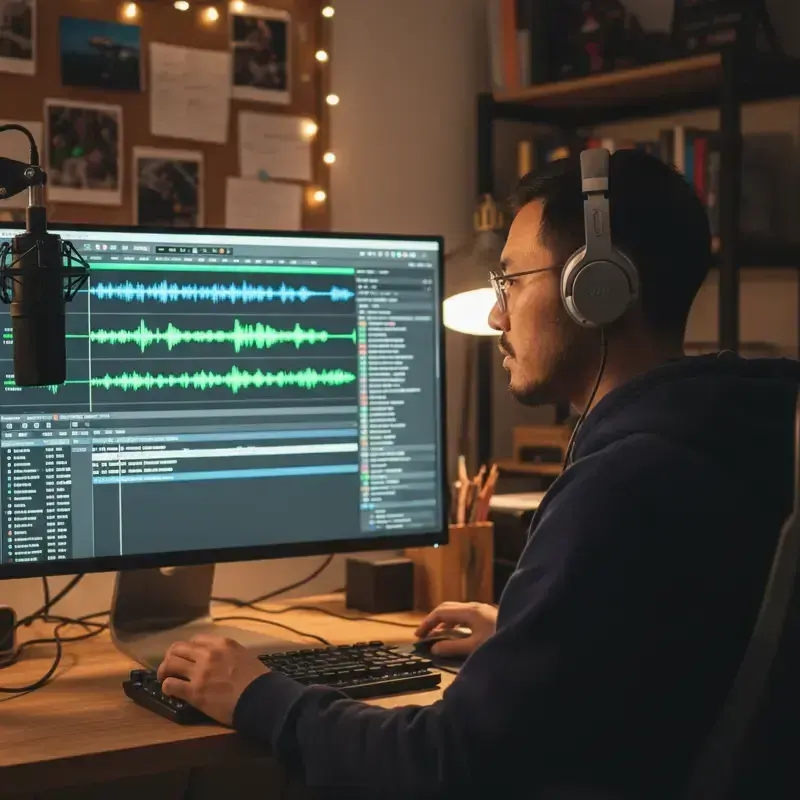 ToolMulti-Voice Text to SpeechPaste a dialogue, a script or a scene and hear every speaker in a different AI voice, then download one MP3.
 AudienceAI Voices for AnimaticsScratch dialogue for animatics, storyboards and pitch reels: a voice per character, exported to time your cut.AudienceVisual Novel Voice ActingVoice your VN's dialogue with a different AI voice per character, for prototypes, demos and trailers.
 GuideAI voice emotion tagsBracket notes and sound tags that work in long-form narration, which voices follow them, and when to stop.GuideHow to do character voicesFive levers narrators use, a character bible for consistency, and how it all maps to an AI cast.
 AudienceWeb Novel to AudiobookVoice your serial chapter by chapter, with the same full cast from chapter one to the latest release.
Paste the script, cast the characters and export an MP3 for your edit. Free to sign up; pay with credits when you create.