Winston
English · Narration
Updated October 2026
AI narration is fast to change and usually costs much less; a skilled human narrator brings interpretation and is still required by some stores. Here is an honest comparison, including when a human is the right call.
Lewis Carroll
Alice's Adventures in Wonderland
Alice asks the grinning Cheshire Cat for directions — and gets none.
The Cat only grinned when it saw Alice. It looked good-natured, she thought; still it had very long claws and a great many teeth, so she felt it ought to be treated with respect.
Side by side
Typical trade-offs as of October 2026, with store rules quoted from their own pages.
| AI with FullCastBook | Human narrator | |
|---|---|---|
| Interpretation | Follows the direction you write | Brings a performer's own reading |
| Subtle, literary performance | Harder to get right | Strongest |
| A distinct voice per character | Yes | One narrator doing voices, or a cast you hire |
| How it's priced | Credits per character voiced | Usually per finished hour |
| Published cost benchmark | Estimate it in the calculator | $500–1,000 per finished hour, as cited by ElevenLabs |
| Turnaround | Generate chapters when you're ready | Depends on the narrator's schedule |
| Fixing a line | Edit the text and regenerate that line | A pickup session |
| Accepted by Audible (ACX) | No | Yes |
| Accepted by Spotify | Yes, labelled as digital narration | Yes |
| Disclosure to listeners | Expected; some stores require it | Not needed |
Store rules quoted from ACX and Spotify help pages, checked October 2026. Human rates vary widely by narrator, genre and country, so get a quote. Work out the AI cost for your book.
Sources: ElevenLabs audiobooks (traditional cost) · ACX audio requirements · Spotify: digital voice narration · ACX voice replica beta · Spoken (listener study summary)
Step-by-step guide
One hard chapter tells you more than any sample reel.
AI vs Human Narrator
The jobs it does better than a studio booking.
Steady voices built for long listening. Demo performances; in the studio you cast from standard and premium voice lists.
English · Narration
English · Narration
English · Narration
English · Narration
English · Narration
In depth
The AI vs human audiobook narrator question has no single answer, because each is good at different things. A skilled human narrator brings interpretation: they decide what a line means and perform it. AI narration reads what's on the page, follows the direction you write, and usually costs much less than a studio production.
This page compares quality, cost, turnaround and where you can sell, and it says plainly when a human narrator is the better choice. Store rules are quoted from ACX and Spotify as of October 2026.
They have improved quickly, and listeners seem more open than they were. The figures most often cited come from a survey of 1,005 US fiction audiobook listeners by Edison Research at SSRS, fielded in May 2026 and published by Spoken, a company that sells AI full-cast narration. As Spoken reports it, its AI full-cast narration scored 61% favorability against 53% for professional human narration, and 66% against 60% on perceived quality, for character-driven fiction.
Read that carefully. It's a vendor-published study, it covers fiction with plenty of characters, and it compares an AI cast with human narration, so it doesn't show that AI beats people at solo narration. What it does suggest is that for dialogue-heavy fiction, a well-made AI cast is no longer a hard sell.
Human narration is usually priced per finished hour of audio. ElevenLabs' audiobooks page, for example, puts traditional production at $500 to $1,000 per finished hour. At about 9,300 words an hour, an 80,000-word novel runs roughly eight and a half finished hours, so by our arithmetic that benchmark lands in the thousands of dollars, before you add a second voice.
AI narration is charged by use. FullCastBook counts credits by the characters voiced, and the audiobook cost calculator shows the credits and the plan for your word count. Turnaround differs too: a narrator works to a schedule of recording, editing and pickups (how long that takes), while AI chapters are generated when you're ready in the AI audiobook generator, and a single line can be redone in place.
Start with the label. Many stores disclose it. Spotify adds a sentence to the description of books uploaded with digital voice narration and labels books made with its own tools "Narrated by Digital Voice". Audible lists its Virtual Voice titles as narrated by Virtual Voice, and Apple Books shows "Narrated by Apple Books".
By ear, listen for the things AI still finds hard: stress on the wrong word in a long sentence, a name pronounced two ways, identical delivery of a repeated phrase, laughter or tears that don't fit the scene, and breaths in odd places. A careful AI production with direction notes hides most of these; a rushed one doesn't.
Choose a human narrator when the performance is the product: literary fiction where subtext matters, memoir read by its author, comedy that lives on timing, poetry, and books whose audience follows a particular narrator. Choose a human, too, when Audible is your main market. ACX's audio submission requirements, updated April 15, 2026, say audiobooks must be narrated by a human unless otherwise authorized.
Narrators are also adopting AI on their own terms. In July 2025 ACX opened a beta that lets a small group of US narrators create a replica of their own voice to take on more work. Expect the line between the two to keep moving.
You don't have to choose once for every book. You can use AI to hear a book before you commit: generate a chapter with a cast, catch clunky dialogue and pronunciation traps, and revise before booking a narrator. Or make an AI full-cast edition of a serial or backlist title and keep human narration for your flagship release.
If you go hybrid, read your contracts first, since some distribution and narrator agreements make the audio edition exclusive. To weigh a cast against one voice, see full cast vs single narrator; for Audible's rules in detail, see AI audiobooks on Audible; and for quick answers, our FAQ.
Sometimes, and many stores label AI narration anyway, so listeners are often told. By ear, odd stress, a name said two ways and emotion that doesn't fit the scene are the usual giveaways; careful direction hides most of them.
They can be, especially dialogue-heavy fiction with a cast. A vendor-published Edison Research survey (May 2026) reported listeners rating AI full-cast narration favorably more often than professional human narration, but quality still depends on the voices, the direction and a careful listen-through.
It depends on the narrator and the plan. ElevenLabs' audiobooks page cites $500–1,000 per finished hour for traditional production, while AI is charged by use. The audiobook cost calculator shows the credits for your book.
Not across the board. ACX still requires human narration unless authorized, performance-driven books still favor people, and narrators are using AI themselves through programs like ACX's voice replica beta. AI is more likely to bring audio to books that wouldn't otherwise get it.
Yes. Some stores require it: Spotify asks you to tick "This audiobook uses digital voice narration" when you upload. Where it isn't required, saying so up front still sets the right expectations.
No. Make it per title: AI for dialogue-heavy fiction, serials and backlist; a human for performance-driven books and for Audible. Check each title's contracts for audio exclusivity first.
Keep exploring
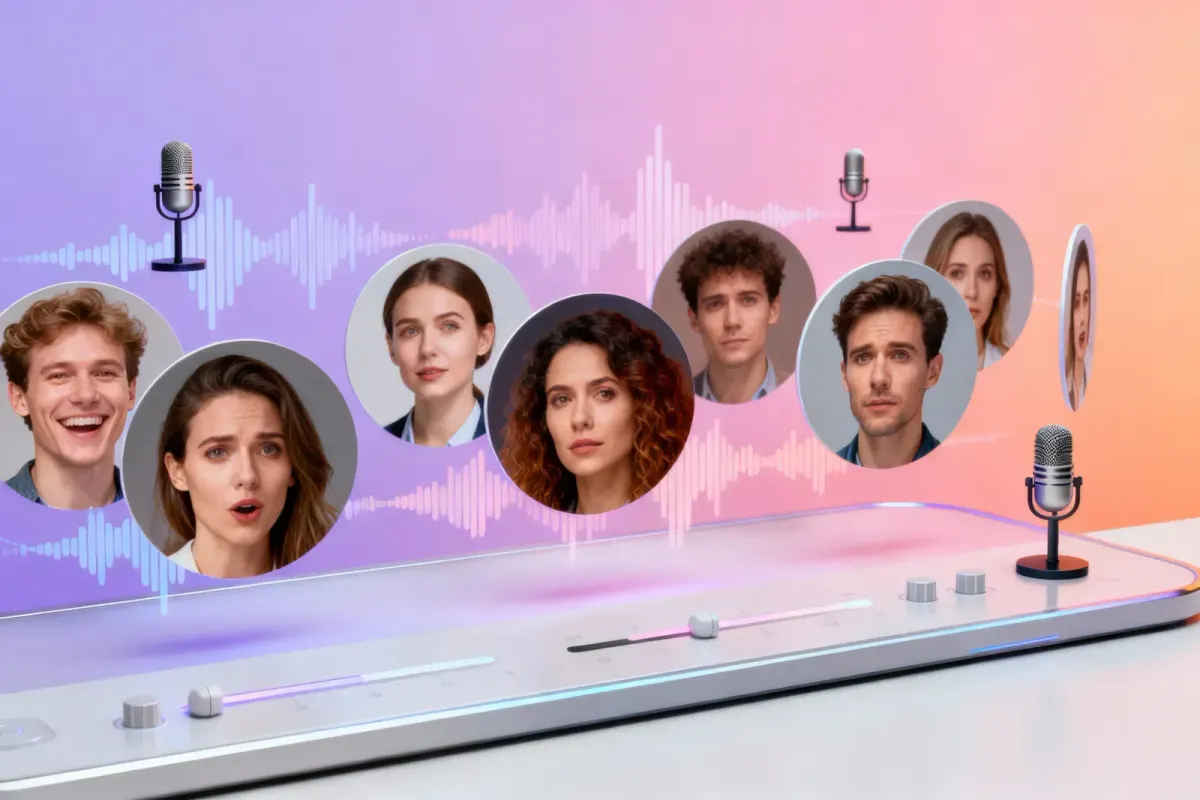 ComparisonFull cast vs single narratorWhen a cast helps a book, when one narrator is the better choice, and what each costs with human performers or AI voices.
 GuideDoes Audible accept AI-narrated audiobooks?What ACX's rules say as of October 2026, how Virtual Voice and voice replicas fit in, and which stores accept AI narration today.
 GuideHow much does it cost to make an audiobook?Narrator rates per finished hour, royalty share, the extras people forget and what AI narration changes, with a worked example.GuideHow long to record an audiobookRecording, editing and review hours per finished hour for a human narrator, set against an AI full cast.
 ToolAI Voices for AudiobooksNarrator and character voices for audiobooks, with casting tips by role and genre so the whole book is easy to listen to.
 GenreNonfiction NarrationOne clear narrator for self-help, business and memoir, chapters from your headings, and a second voice only where it helps.
Upload it, cast the voices and decide with your own ears. Free to start, no card.