Beatrice
English · Narration
For teachers and school librarians
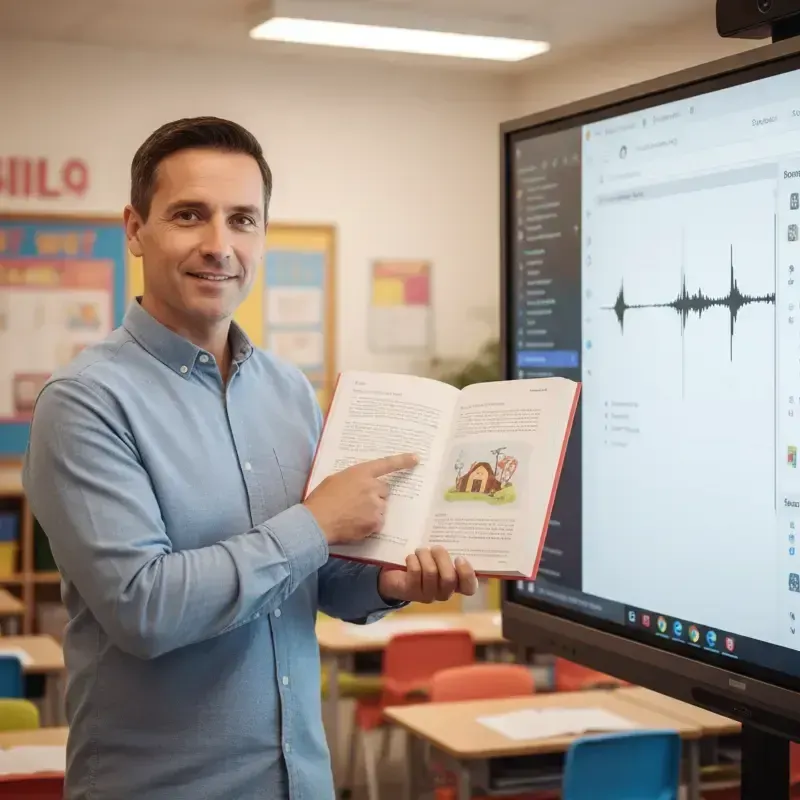
Turn a public-domain class novel, a story you wrote or a reader's theatre script into read-aloud audio: a clear narrator, a different voice for each character, and one file per lesson.
Lewis Carroll
Alice's Adventures in Wonderland
Alice asks the grinning Cheshire Cat for directions — and gets none.
The Cat only grinned when it saw Alice. It looked good-natured, she thought; still it had very long claws and a great many teeth, so she felt it ought to be treated with respect.
Step-by-step guide
From a text you're allowed to use to a file for each lesson.
Classroom Read-Aloud
Clear voices, chapter files and audio that matches the page.
Use cases
Around the live read-aloud, not instead of it.
Demo performances. In the studio you cast from the standard and premium voice lists.
English · Narration
English · Narration
English · Narration
English · Narration
English · Narration
English · Narration
English · Narration
English · Narration
English · Narration
English · Narration
In depth
Nothing replaces you reading to the class: the pauses, the questions, the faces. Classroom read aloud audio is for everything around that moment. The student who was out on Tuesday. The listening station that needs a story while you work with a small group. The class that wants to hear the reader's theatre script they wrote. The reader who needs the chapter twice.
FullCastBook turns texts you're allowed to use into read-aloud audio with a narrator and a distinct voice for every character, split into one file per chapter. This page covers what you can record, how to set it up for lessons, and how to share it.
Picking read alouds for classroom use starts with rights. Begin with texts that are clearly fine: your own writing, students' work with their permission (and their families', where your school asks for it), and public-domain works. In the United States, books published in 1930 or earlier are in the public domain as of 2026, which covers a lot of classic children's literature, fables, myths and older translations. Rules differ by country, so check where you teach. Our public domain audiobook maker page explains where to find clean editions.
In-copyright books are different. Reading a book aloud in a live lesson is one thing; a recording is a copy you can pass around and replay, and for a book still in copyright that usually needs the publisher's permission. The Library of Congress suggests starting with the publisher, and many publishers post read-aloud permission terms on their websites. This is general information, not legal advice; your school or district may have its own policy.
In a single-voice recording, a long conversation leaves listeners tracking "he said" and "she replied" by ear. When each character has a voice of their own, the change of voice itself signals the change of speaker. That matters most for younger listeners and for scenes with three or four characters in the room.
Here's a fable retold for classroom read aloud audio: The North Wind and the Sun argued about which of them was stronger. [boastful, booming] "I can make that traveler take off his cloak," roared the North Wind. He blew and blew, and the traveler only pulled his cloak tighter. [warm, patient] "My turn," said the Sun. In the studio the narrator, the Wind and the Sun each get their own voice, and the notes in brackets set the tone. Afterwards, ask the class why the Sun won.
For reader's theatre, students can write their script as a story with dialogue tags or as a play with a name before each line. Either way, check the speakers in the studio before you generate: detection is AI-based, so fix any line it gives to the wrong character, and delete a name if it ended up in the spoken text. Then let each group hear its script performed before they perform it themselves.
Read aloud chapter books fit lessons naturally. Headings in the text become chapters, and each chapter becomes its own MP3 in the ZIP, numbered so the files stay in order. If a chapter is too long for one sitting, add a heading such as "Part 2" where you want to break, and it becomes two files.
At about 150 words a minute, a 1,500-word chapter runs about ten minutes. To plan a unit, paste the book's word count into the audiobook length calculator and divide by the lessons you have.
Because the text is voiced as written, students can follow along in their copy while they listen. If you cut a footnote or an author's note in the studio, tell the class, or leave it in so the audio and the page match. A teacher read aloud remains the best way to model expression and stop for questions; the recording is there for the re-reads, the absences and the independent work.
A read aloud for students who find decoding hard gives them the same story as everyone else, and students learning English can replay a chapter as often as they need. Most audiobook and podcast apps let listeners slow playback down. Audio is one support among several, and decisions about accommodations belong to the student's teachers, family and specialists. For more, see audiobooks for dyslexia.
Post the MP3s as attachments or links inside your class's learning platform or shared drive, where only your students can reach them. A closed class space is a very different thing from a public link, especially for anything you recorded with a publisher's permission. Keep a note of where each text came from, so the files are easy to reuse next year.
Free credits on sign-up cover a short sample chapter; a whole class novel needs a plan, see pricing. To hear what a cast sounds like first, play the examples on the home page. Picture books and bedtime-style stories have their own guide in children's audiobook narration.
Yes, if the novel is in the public domain or you wrote it. For a book still in copyright, a recording usually needs the publisher's permission, so check the publisher's read-aloud policy first. This is general information, not legal advice.
Your own materials, students' work with permission, public-domain texts (in the US, books published in 1930 or earlier, as of 2026), and books whose publisher allows audio.
Yes. The text is voiced as written, so the audio matches the page unless you edit lines in the studio.
You can voice the words of a picture book you wrote or one in the public domain; the pictures stay on the page. Add a short line such as "Turn the page" if you want a cue for young listeners.
Export a ZIP with one MP3 per chapter and attach the files in your learning platform or shared drive, kept inside the class rather than on a public link.
FullCastBook gives free credits on sign-up, with no card, enough for a short sample chapter. A whole class novel needs a paid plan; see pricing.
Keep exploring
 GenreChildren's Audiobook NarrationA warm narrator, character voices kids can tell apart and a bedtime pace, for picture books, chapter books and your own stories.AudienceAudiobooks for DyslexiaTurn readings that have no audiobook into clear audio, with a distinct voice for each speaker and chapters you can jump to.
 AudienceLanguage Learning AudiobooksTurn graded readers you wrote, public-domain stories and class dialogues into audio with a voice per speaker.
 GenreShakespeare AudiobookVoice every role of a public-domain play, keep or cut the stage directions, and make each scene a chapter.
 GuideAudiobook rights, in plain languageWho holds audio rights, what public domain covers, fan works, YouTube, and a permission request you can copy.
Upload a text you can use, give each character a voice, and export classroom read aloud audio one chapter at a time. Free to start.