Blake
English · Narration
Two leads, two voices
Make an MM romance audiobook where both men always sound like themselves: two clearly different lead voices, duet or dual narration, a voice for every friend, and the same couple all series long.

Lewis Carroll
Alice's Adventures in Wonderland
Alice asks the grinning Cheshire Cat for directions — and gets none.
The Cat only grinned when it saw Alice. It looked good-natured, she thought; still it had very long claws and a great many teeth, so she felt it ought to be treated with respect.
Step-by-step guide
From manuscript to two leads you can tell apart with your eyes closed.
MM Romance Audiobook
What you get, from manuscript to finished audiobook.
Use cases
Where authors and storytellers put it to work.
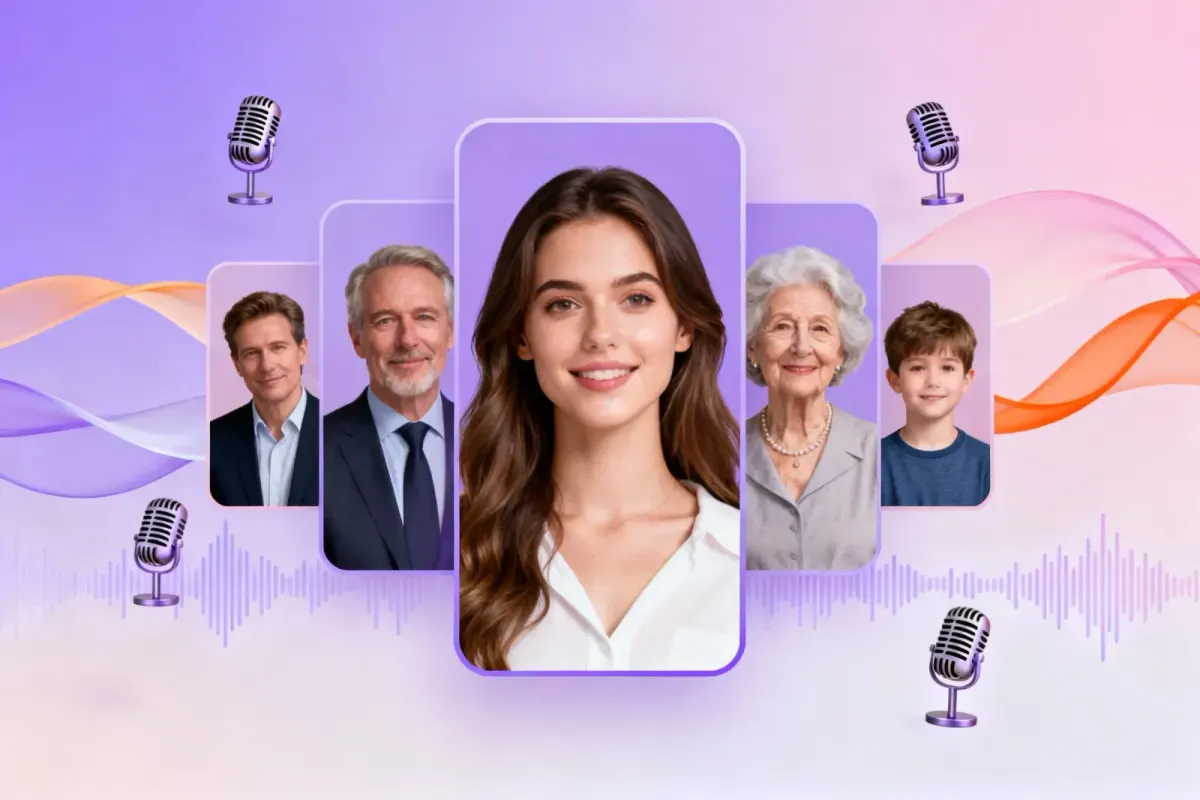

Warm, low, bright and wry voices to imagine as a pair. Demo performances; in the studio you cast from standard and premium voice lists.
English · Narration
English · Narration
English · Narration
English · Narration
English · Narration
English · Narration
English · Narration
English · Narration
English · Narration
English · Narration
In depth
Ask what makes or breaks an MM romance audiobook and the answer usually comes back to the voices, and specifically to the pair. With two male leads, the risk is plain: if the voices sit too close together, a love scene or a fight turns into one man talking to himself. It's no accident that “MM romance narrators” is something listeners search for.
FullCastBook reads your manuscript, finds every character who speaks and gives each one a voice of his own, plus a narrator. The decisions stay with you: which voice each lead gets, who tells each chapter, and how each line is delivered. This guide covers the casting problem that's particular to the genre, and to any gay romance audiobook with two heroes: two male leads who must never blur.
Similar voices are fine on the page and a problem for the ear. Human MM romance narrators build contrast through performance; with AI voices you build it by casting. Pick the two leads so they differ in at least two of these five: pitch (a low, resonant voice against a lighter, brighter one), pace (unhurried against quick), texture (smooth against grainy or breathy), accent or region, and the age the voice reads as. Two deep, slow, smooth voices will blur by chapter three, however good each one is alone.
Then cast for character, not for a type. The grumpy one doesn't have to be the deeper voice, and the younger one doesn't have to be the lighter one; let the voices follow who the men are on the page. A quick test: generate a six-line exchange with the dialogue tags removed, close your eyes and play it back. If you can't tell who said what, swap one voice and try again. Settle the pair on a short scene first, since regenerating uses credits again.
MM romance has a craft problem that other romances mostly don't: both leads are “he”. In a two-man scene, “He pulled back. ‘Don't,’ he said.” can belong to either of them, and a listener can't glance back up the page to check. Distinct voices solve most of this, because the voice itself tells you who is speaking.
Speaker detection does the rest, but it reads the same pronouns you do. It's AI-based, so check the script view for any line given to the wrong man and fix it in a click before you generate. A misattributed line is also useful feedback for the writer: if the detector couldn't tell, some readers can't either. Naming the speaker in an action beat (“Rafe pulled back.”) fixes the page and the audio at once.
Many MM romances alternate first-person chapters between the two leads, so two narrators are a familiar format in the genre. With human narrators there are two ways to do it. In dual narration, each narrator reads his own POV chapters and performs everyone in them, including the other lead. In duet narration, each narrator voices his own character's lines throughout, so both are heard in every shared scene.
With AI voices, duet narration is usually the easier choice for two male leads, because each voice only ever plays one man and the contrast never slips. FullCastBook casts that way by default; to finish the job, give the narration of each POV chapter to that chapter's lead. For strict dual narration, also move the other lead's dialogue in each chapter to that chapter's voice. Romance audiobook narration walks through both styles in more detail.
MM romance is often crowded with friends: teammates, a best friend with opinions, the sister who saw it coming, a found family around a kitchen table. Keep their voices out of the leads' range so the couple always stands out. If one lead is low and the other bright, cast the best friend in a third register, give an older mentor a weathered voice, and let one-scene speakers share a few utility voices.
If the friend group will get books of their own, cast them carefully now. A side character who becomes the lead of book three should keep the voice listeners already know.
Tender scenes pull every voice toward the same place: quieter, slower, closer. That's exactly where two male leads blur most easily. Keep one difference alive even at a whisper. Direct one man [low, steady] and the other [breathless, a little quick], or let one stay wry while the other goes quiet. Put a [breathe] where a reader would pause, and use [sigh] sparingly.
Keep the narration calm around those lines and let the dialogue carry the feeling. The voice models come from third-party providers with their own content rules, so a very explicit line can occasionally be refused; try your most intimate scene on the free credits first, and check each store's rules on adult content before you publish.
A short scene written for this page, from Theo's chapter. Theo has a lighter, dry voice and narrates his own chapters; Rafe has a low, warm, unhurried one.
Theo, narrating: [quiet, wry] The bell over the shop door rang at closing time, and I knew the knock before I saw the coat.
Rafe: [easy, teasing] “You kept the light on. Should I read something into that?”
Theo: [dry, not looking up] “I kept the light on because I'm working.”
Rafe: [softer, a step closer] “You've been on that same page for an hour.”
Theo, narrating: [barely audible] He wasn't wrong. [breathe] I hated that he wasn't wrong.
Five lines, two voices, five short directions. Notice the last “he”: in Theo's chapter, told in Theo's voice, nobody wonders who it means.
FullCastBook saves the cast with the project, so book two starts with both leads and the found family already voiced; new characters are detected and cast as they appear. Export an M4B with chapter markers for audiobook apps, or one MP3 per chapter, and compare the plans when you're ready to voice the whole series. Want to hear how one direction changes a line first? The home page plays examples.
Choose voices that differ in at least two of pitch, pace, texture, accent and age, then test them on an exchange with the dialogue tags removed. If you can't tell them apart with your eyes closed, swap one.
Yes. Every character keeps his own voice by default, which is the heart of duet narration. Give the narration of each POV chapter to that chapter's lead to complete it.
Duet keeps each voice on one man, so the contrast never slips, and it's usually the safer choice with AI voices. Dual suits books whose chapters read like separate confessions; generate one chapter both ways and listen.
Yes, where stores accept AI narration. As of October 2026, Spotify for Authors accepts digital-voice narration when it's labelled, while ACX, which supplies Audible, requires human narration unless otherwise authorized. Check each store's rules, including those on adult content.
Yes. Every speaking character is detected and cast. Keep friends and family out of the leads' range, and let one-scene speakers share a few voices.
At about 155 words a minute, an 80,000-word novel runs roughly 8 hours 36 minutes. The audiobook cost calculator turns your word count into running time and credits.
Keep exploring
 GenreRomance Audiobook NarrationGive both leads their own voice: dual narration by POV chapter or duet narration in every scene, cast and directed by you.
 GenreRomantasy AudiobookDuet leads for the romance, a full cast for the court, fae and dragons, and the same voices every sequel.
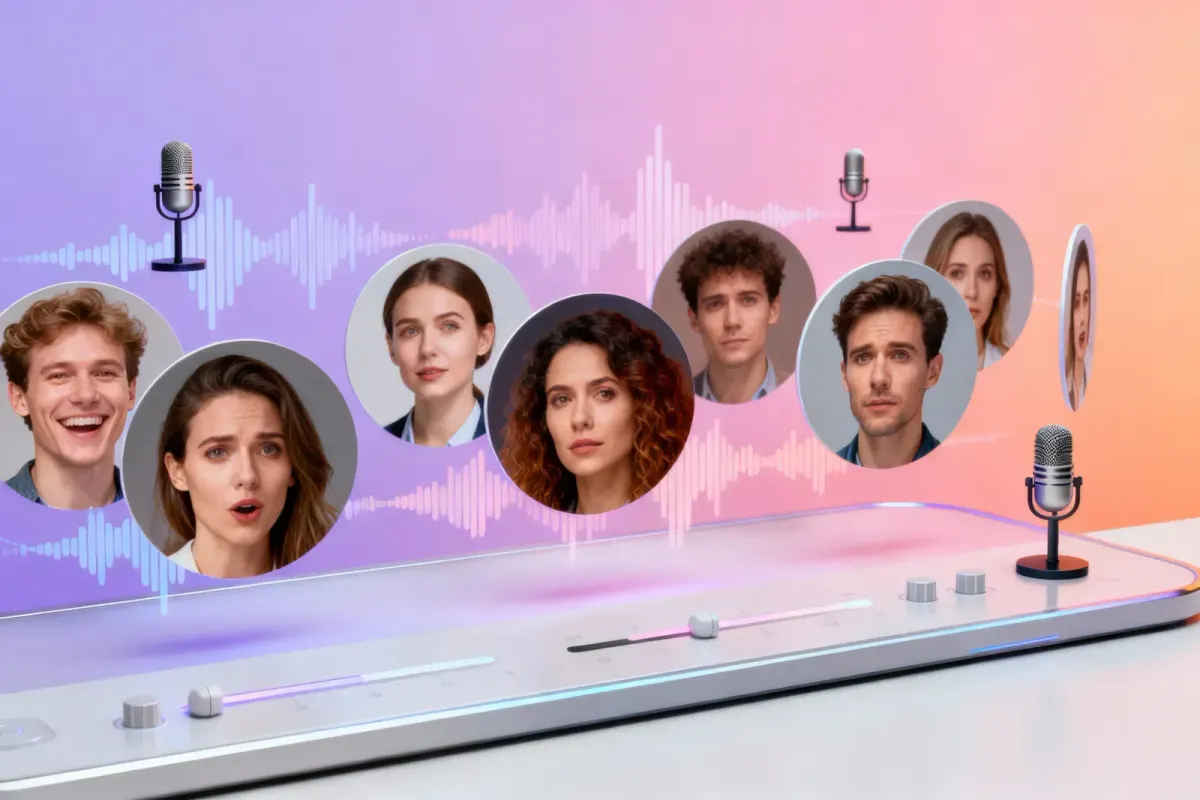 ComparisonFull cast vs single narratorWhen a cast helps a book, when one narrator is the better choice, and what each costs with human performers or AI voices.
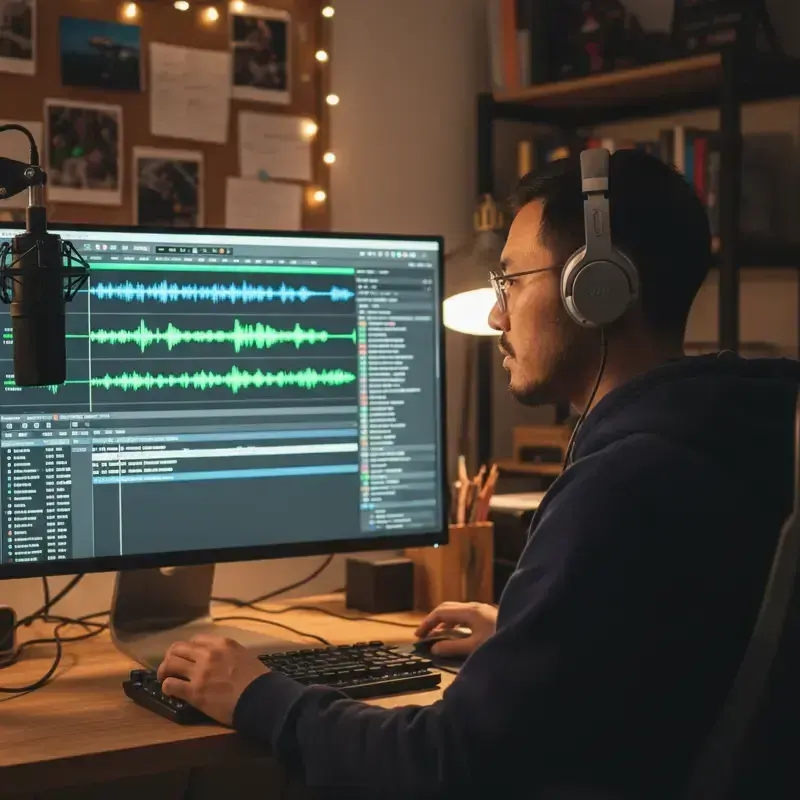 GuideHow to do character voicesFive levers narrators use, a character bible for consistency, and how it all maps to an AI cast.
Upload your MM romance, cast two leads who never blur and hear a sample chapter free. No card needed.