Alaric
English · Narration
For horror authors and story channels
Horror audiobook narration with a narrator who never hurries, victims who sound afraid and something in the dark that sounds wrong. Direct every whisper in brackets, then export for your book or channel.
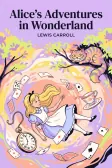
Lewis Carroll
Alice's Adventures in Wonderland
Alice asks the grinning Cheshire Cat for directions — and gets none.
The Cat only grinned when it saw Alice. It looked good-natured, she thought; still it had very long claws and a great many teeth, so she felt it ought to be treated with respect.
Step-by-step guide
From a manuscript or a short story to a file you can publish. Free to start, no card needed.
Horror Narration
The parts of the studio that do the most work in horror audiobook narration.
Use cases
Novels, channels, anthologies and stories told in documents.
Horror audiobook narration examples: storytellers, whisperers and things in the dark. Demo performances; in the studio you cast from standard and premium voice lists.
English · Narration
English · Narration
English · Character
English · Character
English · Narration
English · Narration
English · Narration
English · Narration
English · Narration
English · Character
In depth
Horror audiobook narration lives in the space between words. The scare is rarely the loud part; it's the breath before it, the line read too calmly, the silence where a reply should be. Audio is intimate and often heard alone at night in headphones, so the right horror story narrator can be scarier than the page.
FullCastBook gives you the parts: chapter and speaker detection, a distinct voice for the narrator and every character, and written directions in brackets for the moments that need a whisper. You decide where the dread builds and where it breaks. Hear how a cast sounds in the full-cast examples on the home page.
Restraint. A narrator who stays level while describing something terrible is more frightening than one who sounds scared. In horror audiobook narration, keep the narrator steady through the build-up and let the characters carry the fear: the shaking voice, the forced laugh, the reply that comes a beat too late.
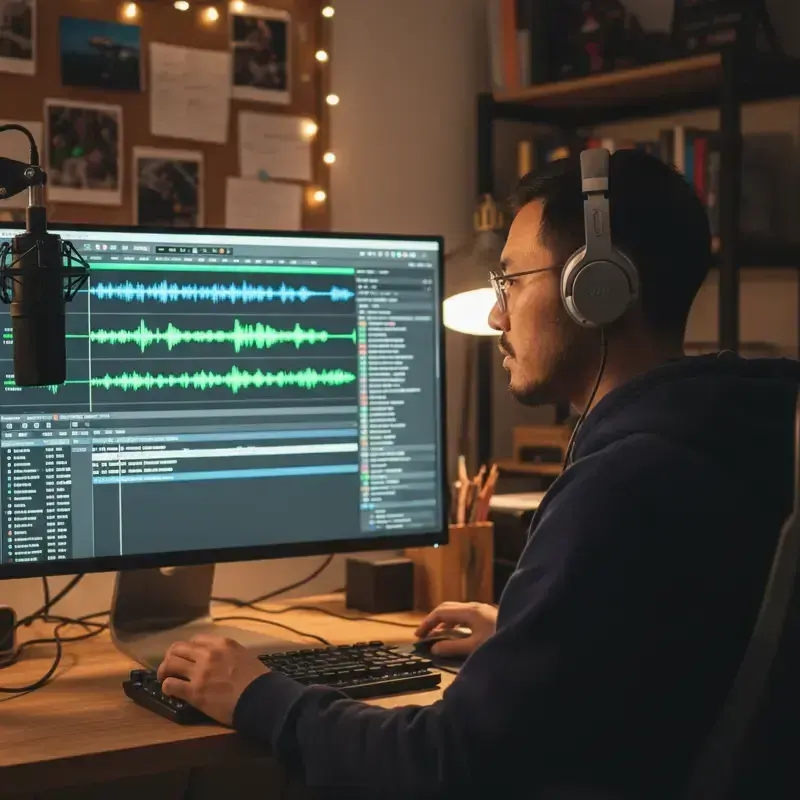
Pacing is the other half. Horror slows down before a scare and cuts off after it. In the text, that means shorter paragraphs on the approach, a direction such as [slow, drawing it out] as the door creaks open, then one short line. For an exact stretch of silence, say three seconds of nothing before the knock, add it in your audio editor after export.
Most horror narrators fit one of three types. The campfire storyteller is warm and slow and lets you lean in too close. The detached reporter reads the worst events as plain fact. The unreliable narrator sounds fine until the voice starts to slip. Decide which one your story needs before you audition a single horror story narrator.
A gravelly, weathered voice suits the campfire storyteller, and a calm, flat one suits the detached reporter; a soft, close voice suits a whispered first-person tale. For monsters and possessed characters, try the most unusual voices in the studio's lists and direct them sparingly. A creepy narrator voice has to work for hours, not just one chilling sentence, so audition each one with a full scene.
Every voice reads your text as written, so in horror audiobook narration you direct it in the text. Directions that suit horror: [whisper, barely audible] for something said from under the bed, [trembling, trying not to cry] for a survivor, [hollow, slow, almost kind] for whatever is pretending to be human, and [breathe] before a line you want the listener to dread.
Bigger moments are directed the same way, for example [a sharp gasp, then a whisper] or [screaming, terrified]. How far a voice commits varies from voice to voice, so listen back and regenerate the line if it falls short or tips into comedy. One scream that lands is worth more than ten that don't.
Found-document horror gains the most from a cast. Give the diary, the police transcript and the voicemail their own voices, and the format that works on the page works in the ear too.
Short stories are where a lot of horror audiobook narration begins: a few thousand words, one setting, one escalating idea. They are quick to cast, quick to direct and easy to test. Paste the text, cast two or three voices and you can hear the whole story in one sitting.
Novels need stamina. Choose a narrator you can listen to for hours, keep the cast consistent across chapters and save heavy direction for the set pieces. Export M4B with chapter markers for audiobook apps, or one file per chapter. If your book drifts into crime and suspense, thriller audiobook narration covers pacing a mystery.
An AI horror story narrator suits story channels and podcasts, where a new episode is due every week. Export each story as MP3, add ambience or music in your editor if you want them, and publish on your own schedule. The files are yours, and commercial use, such as a monetized channel, follows our terms.
Only narrate stories you wrote or have the rights to: a story posted by someone else online still belongs to its author. Each platform has its own rules on AI voices and disclosure, so check them before you upload; for YouTube, making an audiobook for YouTube walks through the posting and disclosure steps. For other spoken-story formats, see AI voice for storytelling, or start from the AI audiobook generator.
There isn't one best voice; it depends on the story. A calm or gravelly narrator suits slow-burn dread, and a soft, close voice suits a whispered first-person tale. Try each candidate on a full scene before you commit: a creepy narrator voice still has to be easy to listen to for a whole story.
Yes, with directions in brackets such as [whisper, barely audible] or [screaming, terrified], plus sound tags like [breathe] and [sigh]. Results vary by voice, so listen back and regenerate any line that falls short.
Yes. Export each story as MP3 and use it in your videos; the files are yours, and commercial use follows our terms. Narrate only stories you wrote or have permission to use, and check YouTube's rules on AI voices.
Not inside FullCastBook: it voices the text, including the breaths, sighs and laughs from sound tags. Export the narration as MP3 and layer rain, drones or music in any audio editor.
Restraint. A level narrator, characters who carry the fear and a few well-placed directions beat a voice that overacts every line. Audition with a full scene and cut any direction that tips into comedy.
Only with permission. Stories posted online, including creepypastas and forum posts, belong to their authors. Ask first, or narrate your own work and public-domain classics.
Keep exploring
 GenreThriller & Mystery NarrationPace a thriller or mystery for the ear: a controlled narrator, suspects listeners can tell apart, reveals that land.
 GuideMake an audiobook on YouTubeRights, the AI use setting, timestamps and monetization: what gets YouTube audiobooks removed, then the build.
 AudienceAI Voice for StorytellingA narrator plus a voice for every character, for story channels, fiction podcasts, classrooms and game nights.
 GenreAI Audio Drama GeneratorTurn a story or a script into a performed drama: a voice per role, directions in brackets, one file per episode.
 GuideAI voice emotion tagsBracket notes and sound tags that work in long-form narration, which voices follow them, and when to stop.
 GenreSci-Fi NarrationA voice for every crew member, alien and ship AI, a steady narrator for the science, and invented words read the way you hear them.
Upload your horror story, cast the narrator and every victim, and direct each whisper. Free to start.