Winston
English · Narration
Dual timelines, letters and period voices
Give the present day and the past their own narrators, let letters and diaries speak in their writers' voices, and cast every character with period weight but no caricature accents.

Lewis Carroll
Alice's Adventures in Wonderland
Alice asks the grinning Cheshire Cat for directions — and gets none.
The Cat only grinned when it saw Alice. It looked good-natured, she thought; still it had very long claws and a great many teeth, so she felt it ought to be treated with respect.
Step-by-step guide
Two timelines, letters in character, period voices. Free to start, nothing to install.
Historical Fiction Audiobook
What you get, from manuscript to finished audiobook.
Use cases
Where authors and storytellers put it to work.

Storytellers with gravity, refined British voices, weathered older voices and a contemporary narrator for the present day. Demo performances; in the studio you cast from standard and premium voice lists.
English · Narration
English · Narration
English · Narration
English · Narration
English · Narration
English · Narration
English · Narration
English · Narration
English · Narration
English · Narration
In depth
A historical fiction audiobook asks the listener to live in another century for ten or fifteen hours. That works when the narration is steady and the period comes through in the casting and the writing, not in theatrical accents. Listeners expect historical novel narration with a little gravity, characters who sound as if they belong to their era, and a clear sense of when and where each chapter takes place.
FullCastBook turns your novel into that cast. It reads the manuscript, finds the chapters and every speaker, and gives each a voice plus a narrator, leaving the casting and direction to you. Two features of the genre gain the most from a cast: dual timelines, and the letters and diaries so many historical novels hide inside them.
Many historical novels alternate between the present day and the past: a granddaughter in the archive, a young woman in 1942. A dual timeline audiobook is easier to follow when each timeline has its own narrator. Pick a contemporary voice for the present, quicker and more casual, and a voice with more weight for the past, then give each timeline's chapters to its narrator.
Name the era in each chapter heading, such as “Chapter 7: Lyon, 1943”, so the chapter list shows which timeline is which and each chapter opens by telling the listener where they are. If a character appears in both timelines, young in the past and old in the present, give the two versions voices with the same accent and a similar timbre so the link can be heard.
Historical novels are full of documents: a letter from the front, a diary found in a trunk, a court record, a telegram. On the page, a change of typeface marks them. In audio, a change of voice does. Move each letter or diary entry to the voice of the character who wrote it, and the listener hears a long-dead woman's words in her own voice while the present-day narrator holds the letter.
Small directions help: [reading aloud, a little formal] for official documents, [private, unguarded] for a diary. If the same diarist appears across many chapters, keep their voice consistent so the documents become a thread of their own.
Accent comes from the voice you choose, not from a direction in brackets, and in historical novel narration less is usually more. A light regional color, such as a refined British voice for an English country house or a warmer American one for a frontier town, carries the period better than a thick stage accent that wears thin by chapter four. Let the writing, its vocabulary and rhythm, do the rest.
Formality is a better tool than accent. Direct a duchess [cool, perfectly polite] and a sergeant [clipped, tired], and you get class and period without caricature. Save the broadest period drama audiobook voices for minor parts, where they add color without having to carry hours.
Kings, generals and famous writers often walk through historical novels. Cast them the way your novel portrays them, not as an impression of the real person: FullCastBook has no voice cloning and doesn't imitate anyone, and an impression would distract anyway. A voice with the right age, weight and accent, plus directions that match your scenes, is enough.
Period settings bring names AI voices may not know: Breton villages, Norse kings, Latin mottoes, French phrases in an English novel. Respell them in the copy you upload, write regnal numbers out (Henry the Eighth, not Henry VIII), and test each one in a single line before you generate the chapter. Every voice reads the same spelling, so the narrator and the characters agree. Keep the list for the sequel.
A scene we wrote for this page. The present-day narrator, a quick, contemporary voice: [quiet, careful] The letter was folded small enough to hide in a shoe. I opened it at the kitchen table.
Margaret, writing in 1917, a warm, steady voice with more weight: [private, unguarded] My dearest Tom, they tell us nothing here, so I shall tell you everything instead.
The present-day narrator: [after a pause] She had been nineteen. I read it twice before I noticed the date. Two narrators, two centuries, and the letter-writer speaks for herself; the present-day narrator never has to perform her.
Historical fiction often runs in sagas across generations. FullCastBook saves the cast with the project, so book two starts with every returning character already cast, and a character who ages across the series can keep the same voice with older, calmer directions. Before you publish a historical fiction audiobook, check each store's rules on AI narration: ACX currently requires human narration unless otherwise authorized.
If your novel is itself a classic, the public domain audiobook maker covers rights. For a period whodunit, see cozy mystery audiobooks; for Regency and historical romance, romance audiobook narration; and to hear a cast first, play the full-cast examples.
FAQ
Something not covered here? Email us at support@fullcastbook.com
Yes. Pick a narrator for each timeline and give each era's chapters to its narrator; naming the era in each chapter heading keeps it clear.
Lightly. Accent comes from the voice you choose, and a light regional color wears better over hours than a thick stage accent. Formality in the directions often says more about the period than accent does.
Move each document to the voice of the character who wrote it, add a short direction like [private, unguarded], and keep that voice for every entry from the same writer.
Yes, if the book is public domain where you'll publish it. Classics such as Scott's Ivanhoe or Dickens's A Tale of Two Cities are public domain in the US and the UK; the public domain audiobook maker explains how to check.
Historical novels often run long. By our arithmetic at 155 words a minute, a 100,000-word novel is about 10 hours 45 minutes and a 150,000-word saga about 16 hours; the audiobook length calculator does the sum for your word count.
No. FullCastBook has no voice cloning; cast real figures from the standard and premium voices by age, weight and accent, the way your novel portrays them.
Keep exploring
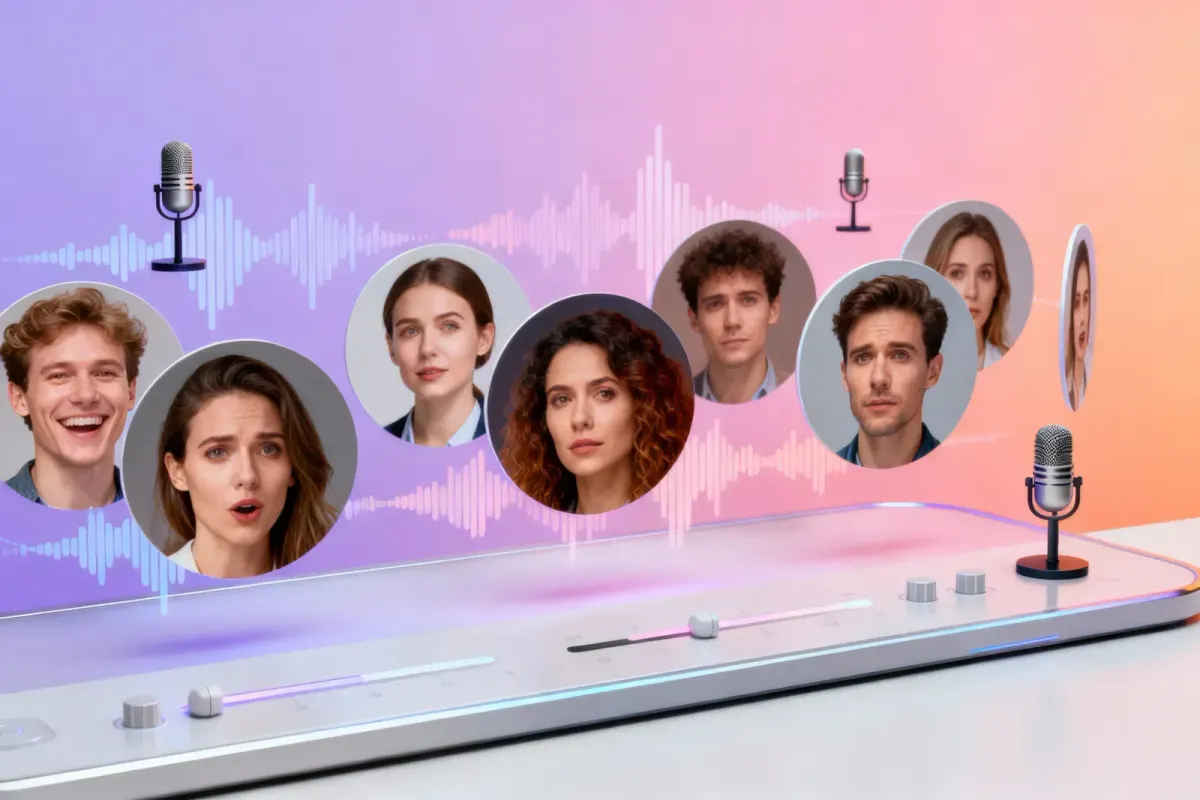 ToolPublic Domain Audiobook MakerTurn a classic from Project Gutenberg or Standard Ebooks into a full-cast audiobook, after checking its status where you publish.
 GenreCozy Mystery AudiobookA sleuth, a sidekick, a town full of suspects, and the same voices from book one to book twelve.GenreRomance Audiobook NarrationGive both leads their own voice: dual narration by POV chapter or duet narration in every scene, cast and directed by you.
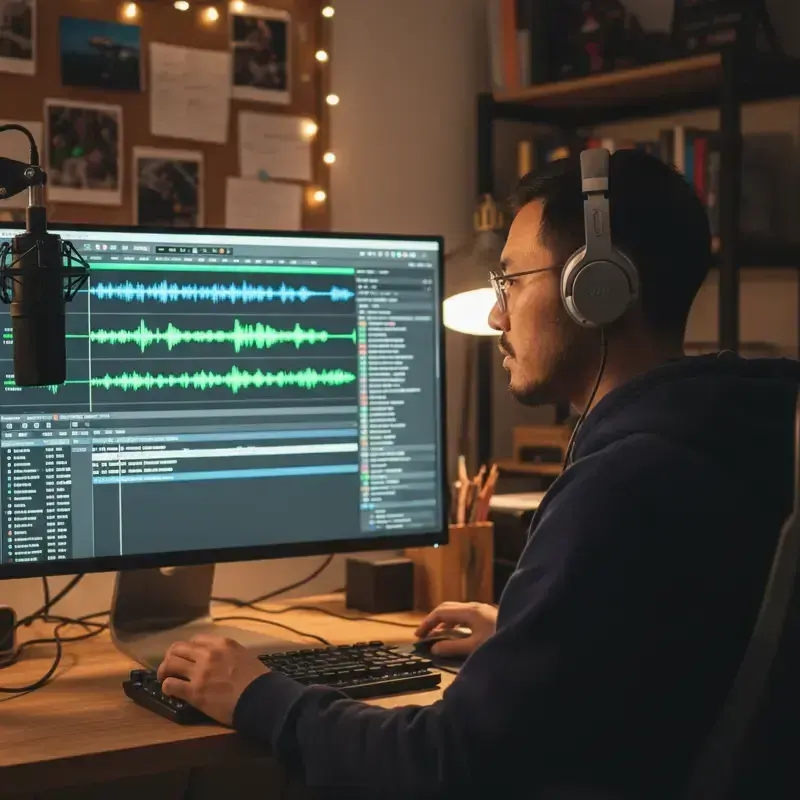 GuideAudiobook pronunciation guideGet every name right with AI voices: a name list, phonetic respelling, and one-line fixes.
 GenreNonfiction NarrationOne clear narrator for self-help, business and memoir, chapters from your headings, and a second voice only where it helps.
Upload your novel, cast a narrator for each timeline and let the letters speak for their writers in a historical fiction audiobook. Free to start.