Mia
English · Narration
For students, adults, parents and teachers
Turn assigned readings, PDFs and DRM-free books into audiobooks for ADHD listeners who'd rather hear the text: short chapter files, a clear narrator and a distinct voice for each speaker.
Lewis Carroll
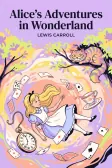
Alice's Adventures in Wonderland
Alice asks the grinning Cheshire Cat for directions — and gets none.
The Cat only grinned when it saw Alice. It looked good-natured, she thought; still it had very long claws and a great many teeth, so she felt it ought to be treated with respect.
Step-by-step guide
From a long reading to short files you can start, pause and finish.
Audiobooks for ADHD
Short files, clear voices and a read-along view.
Use cases
Where authors and storytellers put it to work.
Examples of steady, easy-to-follow narration. Demo performances; in the studio you cast from standard and premium voice lists.
English · Narration
English · Narration
English · Narration
English · Narration
English · Narration
In depth
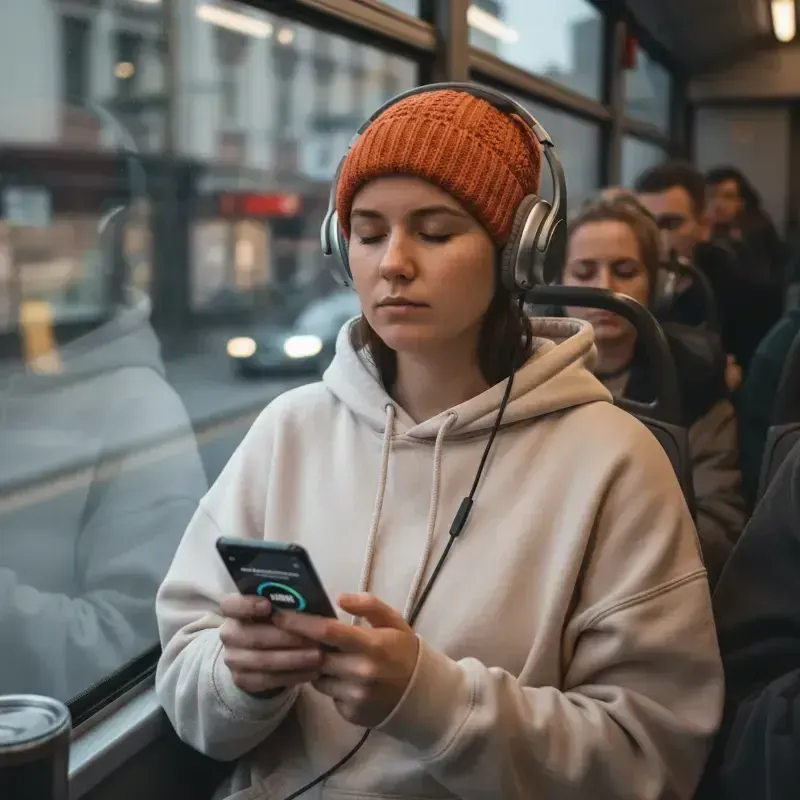
Some people with ADHD find it easier to stay with a text by ear: listening while walking, doodling or doing something with their hands. Others find their attention drifts just as fast with audio. Audiobooks for ADHD readers aren't a cure-all; they're one more way into a text, and the only way to know whether it suits you is to try it on something you actually need to read.
FullCastBook turns readings that have no audiobook into audio: a clear narrator, a distinct voice for each speaker in dialogue, and short chapter files that play in any app. It's an audio tool, not a treatment, and it doesn't replace advice from a doctor, a teacher or a specialist. If decoding print is the main barrier rather than attention, see audiobooks for dyslexia.
A three-hour file with no breaks is a hard thing to start and a harder thing to come back to. Short files help in two ways: each one has a finish line you can see, and when your attention wanders, you only lose your place in a few minutes, not somewhere in an afternoon.
At about 155 words a minute, a 2,000-word section is a listen of roughly 13 minutes. Use that as a guide when you split long chapters in the import review, at section breaks or headings, and give each part a clear name. Then export one MP3 per part, or an M4B with a marker for each, so the next part is always one tap away.
In a single-voice read-aloud, a long conversation leaves you tracking “he said” and “she replied” by ear, and one missed tag can mean losing track of who said what. When every speaking character has their own voice, the change of voice does that work for you.
FullCastBook detects who speaks each line and gives the narrator and every character a distinct voice. Pick the narrator with care, because that voice carries most of the time: one that's clear and steady at the speed you'll actually listen at. Detection is AI-based, so glance at the speakers before you generate.
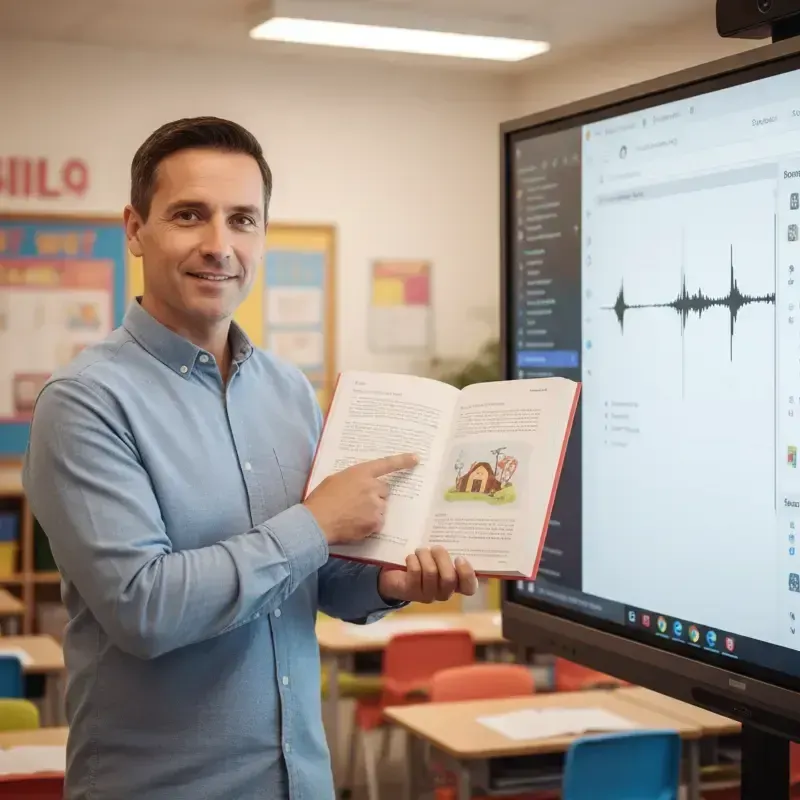
Some listeners stay with a text better when they see it and hear it at once. You can do that with a printed copy and the exported file, or in the studio itself: play a chapter in the browser and each line is highlighted as it's read, with the view scrolling along. If reading along helps you, it's built in; if it doesn't, the files work just as well on their own.
First check what already exists: a published audiobook, a library app, or an accessible format from your school or college's disability services office. For whatever is left, upload the reading as a DRM-free EPUB, DOCX or TXT, or a PDF with a text layer. If you can select the text in the PDF, it has one; scanned pages need OCR first, which FullCastBook doesn't do.
Course PDFs often carry running headers, page furniture and figure captions. Bare page numbers are removed for you; delete any other lines you don't want read before you generate. For more on PDFs, see PDF to audiobook, and for pasted text, text to audiobook.
If you're making audiobooks for ADHD kids, start with texts you have the right to use: handouts the teacher shares, DRM-free books you own, public-domain stories, or the child's own writing read back with a voice for every character. For published textbooks, ask the school or publisher about an audio or accessible edition first.
Whether listening counts for a particular assignment is the teacher's or school's call. In the US, families can raise audio or text to speech for ADHD as part of a conversation about a 504 plan or IEP. Text to speech, audiobooks and plain reading can all have a place; what works is personal.
Are audiobooks good for ADHD? The honest answer is that we couldn't find a controlled study that tests audiobooks for ADHD readers specifically. What there is points in a useful direction without settling the question. A 2016 study in SAGE Open gave 91 participants the same nonfiction text as an audiobook, an e-text or both, and found no statistically significant difference in comprehension, either right away or two weeks later. It didn't look at ADHD.
A 2018 meta-analysis of text-to-speech and read-aloud tools for students with reading disabilities found a small-to-moderate average benefit for reading comprehension; ADHD wasn't analyzed separately. So treat audio as something to try, not a promise. Free credits on sign-up cover a short sample chapter, enough to find out; see the plans for longer reading lists, and the FAQ for how credits and formats work.
For some people, yes: some ADHD readers find it easier to stay with a text by ear, and others don't. We couldn't find a controlled study of audiobooks for ADHD specifically, so try a chapter of something you need to read; a doctor or specialist can advise on ADHD itself.
For understanding a text, listening can work about as well: in a 2016 study of 91 participants, comprehension was similar whether people listened, read, or did both. Whether listening counts for a particular assignment is up to the teacher or school.
Yes, if the PDF has a text layer (you can select the text) and isn't DRM-protected. Scanned pages need OCR first, which FullCastBook doesn't do. Use readings you own or have permission to use.
They do different jobs. A built-in text to speech reader for ADHD needs, like the one in your browser or phone, is quick for emails, web pages and short pieces. A produced audiobook suits long readings, with short chapter files, a distinct voice for each speaker and audio that plays offline.
Yes, for texts you have the right to use that aren't DRM-protected, such as handouts the teacher shares, DRM-free books you own and public-domain stories. For published textbooks, ask the school or publisher about an audio or accessible edition first.
Keep exploring
AudienceAudiobooks for DyslexiaTurn readings that have no audiobook into clear audio, with a distinct voice for each speaker and chapters you can jump to. FormatPDF to AudiobookTurn a text-based PDF into a full-cast audiobook: page numbers dropped, chapters found, every character voiced.
 ToolText to AudiobookPaste a story or upload a TXT file: narration and dialogue are split, every character gets a voice, MP3 or M4B out.
 AudienceClassroom Read-Aloud AudioChapter-sized read-aloud files from texts you can use, with distinct voices so students follow the dialogue.AudienceLanguage Learning AudiobooksTurn graded readers you wrote, public-domain stories and class dialogues into audio with a voice per speaker.
Upload a reading, split it into short parts and try audiobooks for ADHD on a sample chapter, free. No card needed.