Darlene
English · Narration
For parents, teachers and children's authors
A warm narrator, character voices kids can tell apart and a gentle pace for bedtime. Turn picture books, chapter books and your own stories into audio that plays almost anywhere.
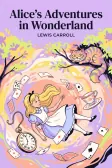
Lewis Carroll
Alice's Adventures in Wonderland
Alice asks the grinning Cheshire Cat for directions — and gets none.
The Cat only grinned when it saw Alice. It looked good-natured, she thought; still it had very long claws and a great many teeth, so she felt it ought to be treated with respect.
Step-by-step guide
Children's audiobook narration from story text to a bedtime file in four steps. Free to start, nothing to install.
Children's Audiobook Narration
What you get, from manuscript to finished audiobook.
Use cases
Where authors and storytellers put it to work.

Side by side
The same story can be directed two ways. Here is what changes.
| Bedtime listening | Daytime and classroom | |
|---|---|---|
| Narrator | Soft, slow and unhurried | Bright, clear and engaging |
| Character voices | Gentle, nothing too scary | Bigger, sillier, more contrast |
| Example direction | [softly, winding down] | [excited, can't wait to tell you] |
| Sound tags | [breathe] and a gentle [sigh] | [laugh] for the funny bits |
| Export | One MP3 per story for a sleep playlist | One file per story or chapter for a listening center |
Soothing narrators, bright daytime voices and a squeaky sidekick or two. Demo performances; in the studio you cast from standard and premium voice lists.
English · Narration
English · Narration
English · Narration
English · Narration
English · Narration
English · Narration
English · Explainer
English · Narration
English · Creator
English · Narration
In depth
Good children's audiobook narration sounds simple and isn't. Young listeners can't flip back a page, so they need a narrator who is warm and clear, a pace slow enough to picture every scene, and character voices so different that nobody wonders who is talking. Get those three right and the story gets asked for again.
FullCastBook, an AI audiobook generator built around casts, handles the casting: it reads the story, finds every character who speaks and gives each one a voice, plus a narrator for everything else. You choose the voices, set the pace with directions in brackets and export files that play almost anywhere. Read-aloud stories for kids, picture books and whole chapter books all start the same way.
A bedtime story narrator has one job: help a child wind down. Choose a voice that is soft and unhurried: a warm, comforting voice or a gentle, low-key one suits the last story of the night, and an older, grandparent-like storyteller brings a familiar calm.
Direct for calm, not drama. Notes like [softly, slowing down] or [quiet, almost a whisper] near the end bring the energy down, and a [breathe] before the last line gives it room. Keep villains gentle at bedtime: a troll can be [grumbly but harmless] instead of menacing, and a cliffhanger can wait until morning.
Here is a short passage of our own, cast and directed for the end of the night.
Narrator, a soft, warm voice: [softly, slowing down] The moon climbed over Pip's window, round and sleepy. Pip, a high, eager voice: [whispering, excited] “Is everyone asleep?” Old Owl, a deep, gravelly older voice: [low and kind, a little drowsy] “Nearly everyone, little one. [sigh] Even the wind has gone to bed.” Narrator: [quiet, almost a whisper] And so did Pip.
Notice what isn't there: no sound effects, no shouting, no surprise at the end. The directions do the slowing down, and the contrast between Pip's high, eager voice and Old Owl's deep, gravelly one keeps the two characters apart even for a sleepy listener.
Picture book narration is short work; many picture books run under 1,000 words, just a few minutes of audio. Without the pictures, listeners need a beat to imagine each new scene, so mark every page turn with a direction on its first line, such as [after a pause, gently], and let repeated refrains keep the same delivery each time they come round.
If you want a page-turn chime, add it afterwards in an audio editor; FullCastBook makes the voices, not the sound effects. Only narrate picture books whose text you wrote, that are in the public domain, or whose publisher has given you audio rights.
Chapter books for early readers have small casts and short chapters, so a narrator and three or four voices are plenty. Make the contrast obvious: a high, eager voice for the sidekick and a deep, gravelly one for the grown-up or the giant, so even a five-year-old can follow the conversation.
Older readers are a different brief. Middle grade and teen books bring bigger casts and characters who need to sound their age, which YA audiobook narration covers; for fantasy-flavored books, the tips in fantasy audiobook narration carry straight over.
Teachers and librarians use kids story narration for listening centers, read-along time and students who need text read aloud. Bright, clear voices suit daytime listening, one file per story is easy to queue up, and rights still apply: narrate your own or your students' stories, public-domain classics, or books whose rights holder allows audio. Planning read-alouds for a whole class is covered in classroom read-aloud.
Export one MP3 for the whole collection, a ZIP with one file per story or chapter, or an M4B with chapter markers for audiobook apps. MP3 plays on phones, tablets and smart speakers, and on kids' audio players that let you load your own files.
If you plan to sell the audiobook, check each store's policy on AI narration first: Spotify accepts digital-voice narration when you label it, and ACX, Audible's production platform, currently requires human narration unless otherwise authorized. Work out the running time and credits with the audiobook cost calculator, or see the plans.
FAQ
Something not covered here? Email us at support@fullcastbook.com
Yes. FullCastBook gives the narrator and each character a distinct voice, and you set the pace with directions in brackets. Listen to the whole story before you share it, and narrate only text you have the rights to.
Soft, warm and unhurried narrators with gentle character voices. Try a few on the same page of your story and pick the one you'd be happy to hear every night.
Yes, with directions: start a line with [slowly, gently] or [softly, winding down], and add [breathe] where you want a calm moment. If a line still feels rushed, adjust the note and regenerate just that line.
Yes, for stories they have the rights to: their own or their students' writing, public-domain classics, or books whose publisher allows audio. Export one file per story for a listening center.
The files are yours to use commercially under our terms, as long as you hold the rights to the text. Stores set their own rules: Spotify accepts labeled digital-voice narration, while ACX currently requires human narration unless otherwise authorized.
Credits are counted by the characters voiced, so a picture book takes few and a long chapter book more. Free credits on sign-up, with no card, cover a sample story; the pricing page lists the plans.
Usually. When it doesn't, respell the word the way it should sound, such as Zib-ble-dorf, and regenerate that line.
Keep exploring
 GenreAI Bedtime StoriesYour own stories, read aloud by a soft narrator with calm character voices, slow pacing and an MP3 to replay every night.GenreYA Audiobook NarrationA first-person lead who sounds like a teen, a friend group you can tell apart, pacing built for dialogue.
 AudienceClassroom Read-Aloud AudioChapter-sized read-aloud files from texts you can use, with distinct voices so students follow the dialogue.
 AudienceAI Voice for StorytellingA narrator plus a voice for every character, for story channels, fiction podcasts, classrooms and game nights.
 GenreFantasy Audiobook NarrationCast a narrator, heroes, villains and creatures from your manuscript, fix invented names and keep the cast for the sequel.
 AudienceAudiobooks for DyslexiaTurn readings that have no audiobook into clear audio, with a distinct voice for each speaker and chapters you can jump to.
Add the story, cast the characters and slow it down for bedtime. Free to start, no card.